Evaluating the Right Daycare Center
Early Childhood Initiatives: Developing a Robust Foundation for Long-term Accomplishment
Early childhood tuition holds a major role in shaping a child's future. It provides the groundwork for principal analytical, social, and sentimental skills. Examination indicates that premium early tuition can lead to excellent learning outcomes and individual development. However, the nuances of effective undertakings and the influence of community involvement raise important questions. Which aspects truly create an impact in a child's early educational experience? The answers may surprise many.
The Importance of Preschool Learning in Development
Early childhood schooling functions as an crucial role in a child's total development, as it establishes the base for perpetual education and social skills. During these formative years, children are introduced to structured environments that support exploration and wonder. This exposure boosts cognitive growth, enabling children to create thoughts and address challenges. In addition, early education exposes children to multiple perspectives, promoting creativity and analytical reasoning.
Early childhood education supplies opportunities for engagement with peers and adults, which is vital for strengthening proficient communication abilities and psychological maturity. Children start learning to traverse interpersonal connections, recognize social norms, and cultivate compassion. Additionally, taking part in group activities imparts teamwork and dispute management, vital instruments for future social connections. The importance of early childhood education should not be minimized, as it prepares children not only academically but also bestows them with the required competencies to flourish in assorted social contexts for the duration of their lives.
Fundamental Capabilities Created in Early Preschool Facilities
Within developmental environments, children develop essential competencies that direct their future social interactions and mental health. Interpersonal skills foster mutual effort and communication, and critical thinking progression motivates solution development abilities. Concurrently, emotional regulation techniques assist children in managing their sentiments proficiently, providing the groundwork for resilience.
Social Exchange Techniques
Social interaction skills grow robustly in early learning environments, where children engage with peers and educators in various activities. These interactions are essential for developing vital communication skills such as sharing, listening, and taking turns. Through collaborative play and group projects, children learn to convey their thoughts and emotions successfully while also gaining empathy and understanding of diverse perspectives. Teachers facilitate these interactions by modeling appropriate social behaviors and providing structured opportunities for teamwork. As children navigate friendships and resolve conflicts, they build resilience and adaptability, preparing them for future social settings. Ultimately, strong social interaction skills nurture a sense of belonging and community, serving as a foundational element for lifelong interpersonal relationships.
Critical Thinking Advancement
Establishing critical thinking competencies in early learning spaces creates the underpinning for young learners' intellectual expansion. Stimulating activities, like problem-solving work and exploratory questions, motivate students to examine information and consider differing perspectives. Through exploration and hands-on work, children learn to pose inquiries, develop predictions, and verify their concepts, nurturing a sense of wonder. Moreover, group-based assignments foster discussion and critical thought, permitting children to express their perspectives and scrutinize their assumptions. Instructors function as a vital role by establishing an space that prioritizes investigation and encourages self-directed learning. By incorporating analytical reasoning into regular exercises, early childhood initiatives equip children to become proficient decision-makers, preparing the foundation for scholastic attainment and lifelong instruction.
Strategies for Emotional Regulation
Many early childhood education programs embed emotional regulation techniques to help children process their feelings and interactions. These techniques often comprise mindfulness practices, such as deep breathing exercises, which teach children to pause and reflect before reacting. Additionally, educators foster the use of "feelings charts," enabling children to articulate and identify their emotions in a purposeful manner. Role-playing scenarios are also employed, allowing children to practice appropriate responses to various emotional situations. By fostering these skills, early learning environments build resilience and empathy, essential for social development. Ultimately, the integration of emotional regulation techniques furnishes children with the tools to handle their emotions effectively, laying a foundation for healthier relationships and improved mental well-being throughout life.
The Importance of Quality Early Education on Later Accomplishments
Quality childhood education creates a strong foundation for future achievement, shaping children's cognitive, social, and emotional development. Research reveals that children who participate in high-quality preschool programs demonstrate better academic results and heightened readiness for school. These programs build analytical thinking, improve language acquisition, and promote problem-solving abilities, all crucial for ongoing education.
Moreover, high-quality early learning nurtures social skills, encouraging cooperation and communication among peers. Children develop the ability to manage relationships, which supports emotional resilience and successful dispute management. The benefits go further than individual achievement; communities with strong early learning programs enjoy lower crime rates and increased economic output.
Committing to quality early education not only equips children with indispensable skills but also establishes a multiplier effect that advances societal well-being. Consequently, emphasizing early childhood education becomes paramount, making certain that future generations are prepared to thrive in an increasingly multifaceted world.
How Playing Enriches Early Childhood Education
Playing serves as a core element of early childhood learning, acting as a conduit for different types of activities that ignite learning. Through engaging in play, children obtain cognitive growth and cultivate their interpersonal skills, fostering essential competencies for future interactions. Comprehending the significance of play in early schooling can illuminate its relevance in developing well-rounded individuals.
Types Of Recreational Activities
Taking part in various types of recreational games significantly enhances early childhood education. These activities can be organized into several types, each providing unique benefits.
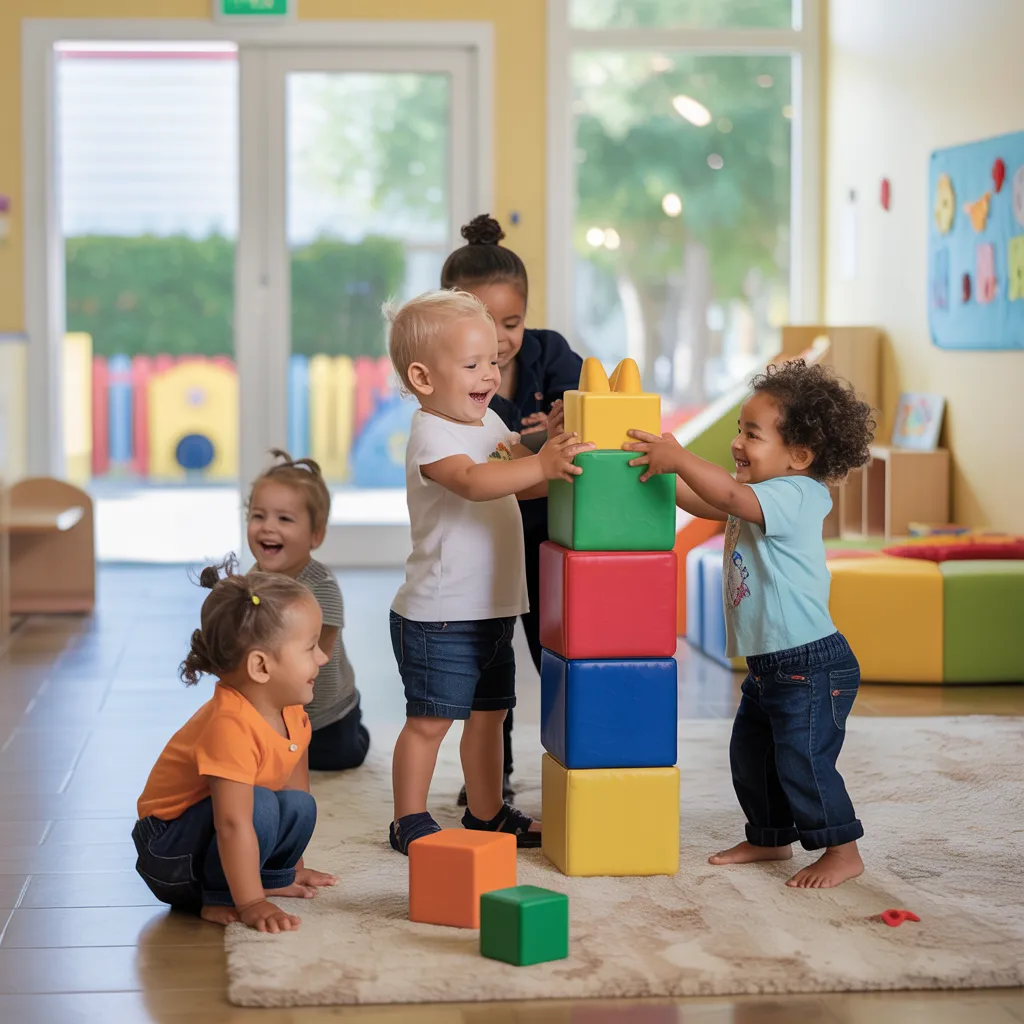
Play that sparks the mind allows children the opportunity to access their imaginative abilities and cultivate problem-solving skills through acting out various scenarios. Building and putting together through constructive play boosts fine motor skills and spatial awareness. Active play aids physical growth and inspires social interactions, building cooperation and expression.
Games with rules familiarize children to ideas of fairness and cooperation, assisting them learn to handle social relationships. Finally, hands-on play engages children through hands-on interaction, stimulating their senses and boosting cognitive connections. Each type of play activity is essential in creating a vibrant educational space, paving the way for well-rounded growth in early childhood education.
Intellectual Progression Via Games
Through different kinds of play activities, children naturally improve their cognitive development. Participating in creative play, for example, allows children to explore problem-solving skills and creative thinking. As they work through various situations, they develop the ability to think critically and choose wisely. Puzzles and building blocks promote analytical thinking and spatial awareness, developing numeracy abilities. Additionally, role-playing encourages language development as children articulate thoughts and negotiate roles. Tactile exploration, involving materials like sand or water, activates exploration and inquiry, deepening their understanding of the world. Each of these types of play plays a distinct role in mental development, laying a foundation for educational achievement. Consequently, play serves not only as a source of joy but also as a essential vehicle for mental advancement in preschool settings.
Social Skills Development
Children naturally develop social skills during collaborative play experiences. Through engaging in group games and imaginative play, they acquire essential skills like sharing, turn-taking, and effective communication. These interactions promote empathy, as children navigate differing viewpoints and negotiate conflicts. Furthermore, play provides a safe environment for them to practice problem-solving, improving their ability to cooperate with peers. As they engage in shared tasks, children develop trust and build friendships, which are vital for emotional and social well-being. This foundation not only underpins immediate social interactions but also prepares them for future relationships in school and beyond. Overall, play serves as an important mechanism for enhancing social skills, establishing a strong groundwork for lifelong social competence.
Strategies to Identify the Best Fit Early Education Program Out There?
Picking an ideal educational option can prove tough for caregivers. Multiple aspects must be considered to ensure an perfect match for a child's needs. To begin, guardians should review the program structure, looking for programs that emphasize play-based learning and growth stages. Observing teacher-student dynamics can give insight into how teachers engage with students and foster a caring environment.
Furthermore, the skills and expertise of staff are crucial. Programs managed by trained professionals often have a more structured approach to instruction. Parents should also review the program's facilities and safety protocols, ensuring they meet health and safety standards.
To summarize, logistical aspects like location, operating times, and expenditure should correspond to a family's daily life and monetary resources. When carefully weighing these elements, families are positioned to make informed decisions that lay a strong foundation for their child's scholastic advancement.
Community and Parental Participation in Early Childhood Development
Engagement from both the community and parents plays an essential role in enhancing early childhood education. Collaborative initiatives create a nurturing environment that fosters children's development and learning. Community organizations, such as libraries and health services, can offer resources and programs that enhance educational experiences. These partnerships often lead to increased access to educational materials and extracurricular activities, aiding young learners.
Moreover, parent participation is important; when parents engage actively in their child's learning, children demonstrate improved scholastic achievement and interpersonal abilities. This engagement can take many shapes, such as attending school events, volunteering, or communicating with educators.

Popular Questions Asked Regularly
What Competencies Must be Essential for Early Childhood Teachers?
Educators working in early childhood should have appropriate degrees in education or child development, credentials in first aid and CPR, and training in early childhood instructional methods. Familiarity with varying learning needs and effective communication skills are essential requirements.
What Ways Can I Help Education at Home?
To enhance at-home learning, parents can establish a structured routine, participate in interactive reading, encourage hands-on learning, supply learning materials, and foster a positive learning environment that encourages exploration and curiosity in children.
Identifying Indicators of Developmental Delays
Symptoms of developmental problems might involve difficulty in communication, limited social engagement, challenges with motor skills, and problem-solving challenges. Parents ought to track these behaviors and consult experts for assessment and guidance if concerns arise.
How Can I Tell if My Child Is Prepared for School?
A child could be ready for school if they are able to express requirements, follow simple instructions, interact Early Childhood Education with classmates, show fundamental self-care abilities, and display interest in education. These indicators suggest preparedness for a school setting.
What Function Do Toys Play in Initial Schooling?
Toys serve as an vital role in early education by promoting cognitive, interpersonal, and motor skills growth. Through imaginative play and problem-solving, children learn important concepts, fostering creative thinking and preparing them for upcoming educational opportunities.